(RSD 2020 Special) Pink Floyd – The US Singles

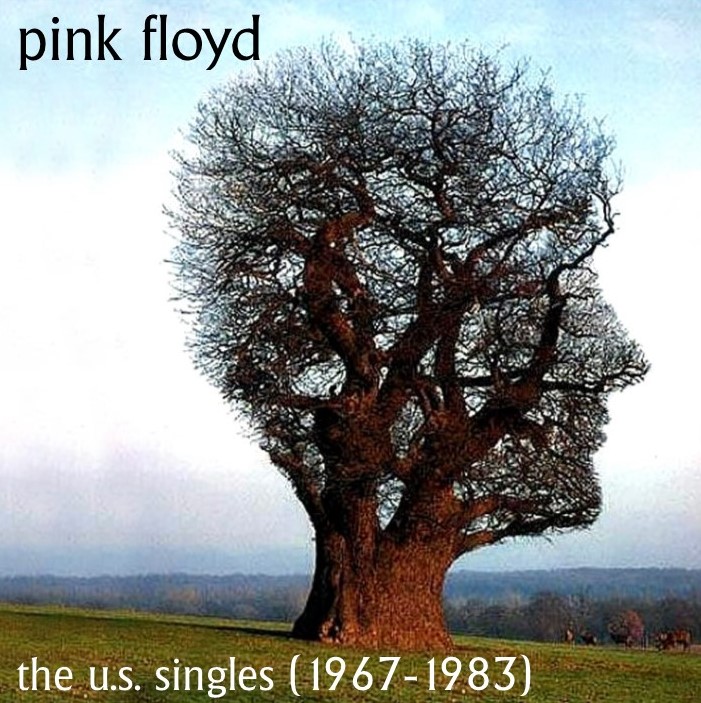
When Record Store Day (RSD) was cancelled back in April, I was interested to see what would happen with all of the stock which had already been pressed up and was ready to be distributed to participating shops. Not a lot for a while, but then it was announced that there would not be one RSD, but three. The first of these is today so I have been thinking about what I would like to see as a RSD release if I was allowed to pick anything from the archives. Therefore, for each of these RSD’s I will be putting together a compilation of songs that I think would be a welcome release. The first of these is Pink Floyd and a compilation of the singles that were put together for the US market. 

Pink Floyd had started life releasing singles and breaking in the British Top 20 with ‘Arnold Layne’ and ‘See Emily Play’. These songs were written by Syd Barrett but he was soon to leave the band for reasons that have been documented in great length elsewhere. The group continued to record after Barrett’s departure and though they remained a successful album band (non of their LP’s have failed to reach the UK top ten), on the singles front, the hits dried up. After ‘Point Me At The Sky’, the Floyd decided to stop releasing singles in the UK because, as Roger Water said “we were no bloody good at it”. This would remain the case until 1979 when ‘Another Brick In The Wall (Part II) became an unlikely number 1 single in many of the major record buying markets around the world, including the UK.

In other parts of the world, this was not the case. For this compilation, we are going to focus on the US as a number of singles and an EP were pressed up. Some of these were promotional releases designed for DJs to promote the parent album. Others were commercially released singles and one was an EP of ‘Dark Side Of The Moon’ songs. Most were edited, and some of the earlier songs on this collection are mono mixes as AM radio was still king in the early 1970’s.

Side A

  1. One Of These Days (Mono Promo Single Edit)
  2. Fearless (Mono Promo Single Edit)
  3. Free Four (Promo Single Edit)
  4. Money (Promo EP)
  5. Breathe (Promo EP)
  6. Time (Promo EP)
  7. Us & Them (Promo EP)

Side B

  1. Have A Cigar (Mono Single Edit)
  2. Run Like Hell (Single Version)
  3. One Of My Turns (Single Version)
  4. Comfortably Numb (Single Edit)
  5. Not Now John (Obscured Single Edit)
  6. Flaming (Mono Single Promo)

One Of These Days (Single A Side) — This was a commercial released single that has similar playing times to the songs when they appeared on the parent album and was in stereo. However, the promo single was mixed in mono and there were various small edits throughout the song to reduce playing time. 

Fearless (B Side of One Of These Days) — Like the A Side, this was mixed into mono for the promo release. The album version has two verses, but the promo single has only one. It mainly consists of the first verse (until “just wait a while for the right day”) but the last lines were replaced by those of the second verse (“and as you rise … faces in the crowd”). This version also fades out earlier. 

Free Four – There isn’t too much different here between the album version and this single mix. This version does fade out earlier and it has been mixed into mono.

Dark Side of the Moon EP – The songs included on this EP are ‘Breathe’, ‘Time’, Us & Them’ and ‘Money’. Released after the parent album had came out. A note on the back of the EP cover says “Pink Floyd’s latest No.1 album, ‘Dark Side of the Moon’ went platinum a few months after release – with smash sales surpassing three times those of a standard gold album. Here are four representative selections take from the ‘Dark Side of the Moon’ LP, edited down for your airplay convenience”. Apart from the edits to bring down the playing time, ‘Time’ has been edited so that the introduction to the song has also been placed at the end. The profanity in the song ‘Money’ has been edited out and all of these songs have been mixed into mono. 

Have A Cigar – The introduction of this songs has been reduced from eight bars to four. There are also some small edits in the guitar and keyboard themes. There is also an early fade out during the final guitar solo. Once again, this song has been mixed to mono. 

Run Like Hell – This is the first song on this collection to have been released in stereo. The mix does not include any crowd noise during intro and outro. There is also only one guitar theme before the first “Run, run, run, run…” instead of two, but it is repeated twice at the end (after the scream) instead of once. The “hunt” part has also been edited.

Comfortably Numb – The final guitar solo is stuck to the end of the first verse (no first guitar solo, no second verse).

One Of My Turns – The dialling tone that starts the album version of this song has been removed. The synth in the songs opening bars has been brought forward in the mix and the vocal effects on the ‘Why are you running away’ lyric are now sustained for about three seconds longer. 

Not Now John – This is known as the Obscured version, because this song is notable for using some very strong profanity. The original album version has lyrics that say “Fuck all that”, To make a radio-friendly version, this lyric was changed to ‘Stuff all that’. Note that they just recorded “Stuff all that” loud enough to drown the original, which is still there. The intro is slightly different from the album version as the laugh has been edited out. This version also fades out before the lyrics “Where’s the fucking bar John?”.

Flaming – Pink Floyd’s debut album was butchered by their US record label when it was released in 1967. Out went the songs ‘Astronomy Domine’, ‘Flaming’ and ‘Bike’. Instead, the US album included ‘See Emily Play’. The running order was also completely different. ‘Flaming’ was released as a single in mono and is noticeable as the sound effects are much louder than those of the stereo mix. It is very similar, if not identical to the mono mix used on the UK album. Why was ‘Flaming’ stuck at the end even though it was the first song to be released? Well, it didn’t really fit in anywhere else, especially as ‘One Of These Days’ is a perfect song to start this record with.

The album art was taken from https://www.askideas.com/very-funny-human-face-tree-picture/. I was looking for an image that reminded me of the style used by Hipgnosis, the design company that famously worked with Pink Floyd (and numerous other bands).  

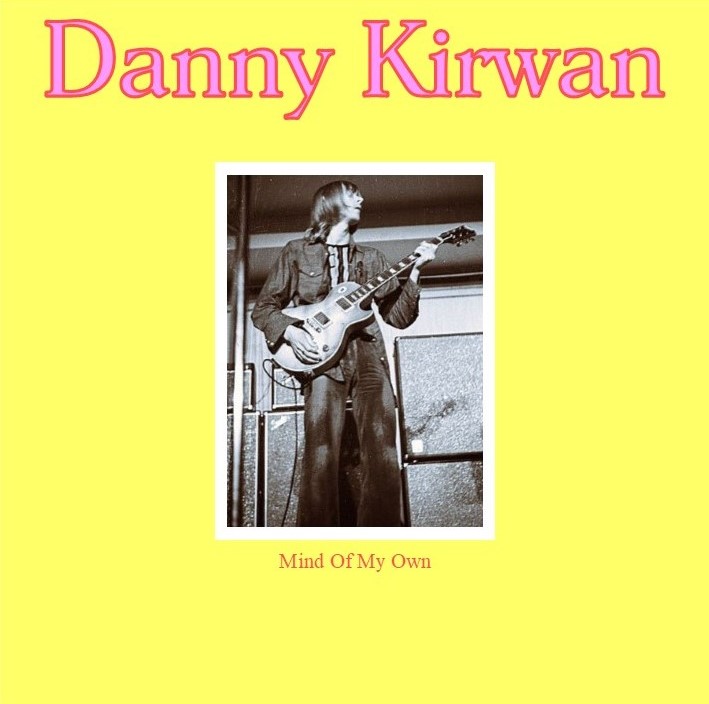
Danny Kirwan – Mind Of My Own/Sands Of Time

Mind Of My Own (1971)

This idea for the following two what-if records came about because I was trying to put together a fourth Fleetwood Mac album from the Peter Green line up. I did have a go but this ultimately failed because looking at all of the available material, there was a lack of new material from Green and nothing new from Jeremy Spencer, which is not much of a surprise as he only just released a solo album. On the other hand, Danny Kirwan had lots of material from the Green era that did not make it onto a Mac studio album. From 1968 to 1970, he wrote enough material to fill an album. For this album to come out though, we need to do a little bit of rewriting of the band’s history. 

Fleetwood Mac had spent the majority of 1970 touring America and then Europe, but all was not happy in the camp. Founder member and talismanic guitar player Peter Green was struggling with the trappings of fame and the band have noticed his behaviour has changed. He has grown a beard, started wearing a crucifix (which was odd in the fact that Green was Jewish) and had spoken about giving his money away. In March, he spent some time in a commune in Munich, Germany where he ingests some LSD that, according to the manager Clifford Davis, is where Green’s fragile mental state finally broke. Green decided to leave the band he had founded and the remaining quartet soldier on for a few gigs and record the album ‘Kiln House’ before bringing in Christine McVie, bass player John McVie’s wife and famous musician in her own right to fill out the sound. The band records the single, ’Dragonfly’ and ‘The Purple Dancer’ before the end of the year which is released in March of 1971. The song is not a hit and it is the only Kirwan pen A-Side released in his native UK. 

This line up continues to tour and record radio sessions before returning the USA in February for another Stateside tour. It is here that Spencer starts to become disillusioned with life in the Mac. He is unimpressed with how he sounds on live recordings and when a major earthquake hits Los Angeles, he fails to persuade the band not to go there. When the band arrives in L.A., Spencer says that he is going to a bookshop but never returns. The band have to cancel all their L.A. shows because they are looking for their missing guitar player. When he is eventually found, Spencer has joined the religious group, the Children of God. Despite appeals from the band to fulfil his obligations to the band, Spencer will not return. The band play a few gigs as four piece before convincing Peter Green to rejoin them for a few gigs before they can recruit a permanent replacement. It is here that Bob Welch comes into the picture. The band continue to record and have a core of four members throughout this period. Welch convinces the band to move to America as they have become more successful there than their native UK. Welch leaves the band shortly after this move the band recruit Stevie Nicks and Lindsey Buckingham, becoming one of the biggest bands on the planet. 

What if the band had decided that after losing two founder members that were not only front men for the group but songwriters to boot? This is where these what if albums come in and the history of Danny Kirwan could have been a bit different.

With the band returning to Britain after the end of their 1971 USA tour, Kirwan and the remainder of Fleetwood Mac decide that losing Green and Spencer is too much for the group to carry on so they disband. The rhythm section of Mick Fleetwood and John McVie are well known enough to become session musicians (which they did do in reality when they played on Warren Zevon’s song ‘Werewolves of London’). Christine McVie resurrects her solo career but like her previous attempt at fronting a band under her own name, it does not last and she retreats into studio work. What of Danny Kirwan though. Under the direction of Mac’s manager, Clifford Davis, he is left to fulfil the band’s recording contract with Reprise and promises to deliver two albums in the next two years.

Kirwan did not have a great deal of new material so he decided to resurrect some songs that he had performed with Fleetwood Mac either live or on radio show but had not made their way onto an official album. Roping in the other ex members of Fleetwood Mac for the sessions, Kirwan produces an album that is quite eclectic. I have listed next to songs where these songs can be found.

Side 1

  1. Like It This Way (The Vaudeville Years of Fleetwood Mac)
  2. Early Morning Come (Live At The BBC)
  3. Mind Of My Own (Show Biz Blues)
  4. Open The Door (Madison Blues)
  5. Down At The Crown (Madison Blues)

Side 2

  1. Tell Me From The Start (The Vaudeville Years of Fleetwood Mac)
  2. Love It Seems (The Vaudeville Years of Fleetwood Mac)
  3. Loving Kind (Live In Boston)
  4. Only You (Live At The BBC)
  5. When I See My Baby (Live At The BBC)
  6. Farewell (The Vaudeville Years of Fleetwood Mac)

Kirwan was rooted in blues music but he did have quite an eclectic taste. This are shown by the songs included on this record. ’Like It This Way’, ‘Early Morning Come’ and ‘Mind of My Own’ highlight Kirwan’s blues influences but this changes with ‘Open The Door’ which shows some distinctly country roots. ‘Down At The Crown’, a song about the pub located near the Fleetwood Mac’s communal house in Hampshire shows a rockier side to Kirwan. 

Side two opens with ‘Tell Me From The Start’ which sounds very out of time for the late 60’s, early 70s. It harks back to an earlier age and shows an influence of swing. ‘Love It Seems’ hints at the songs Kirwan would write and contribute to the ‘Future Games’ album. ‘Loving Kind’ and ‘Only You’ reintroduce more blues to the mix before ‘When I See My Baby’, which sounds like something Jeremy Spencer would compose; a pastiche of a 50’s doo-wop band. The album finishes with Farewell would could be said to be a bit of a cheat because it was an early version of Earl Grey, that was included on the ‘Kiln House’ LP. It is different enough to stand on its own and means that the two sides of the album have similar run times.

Sands of Time (1972)

Sales of the first album are strong enough for Kirwan to go into the studio to record again. Kirwan once again uses the ex-Mac members as his backing band and this album is split between the more rock orientated songs on Side A and the more mellow songs on Side B. The album is not as successful as the previous effort so Kirwan is sent out on tour to promote it. However, this is where it all goes wrong. Kirwan has been a heavy drinker for the last couple of years and this has now turned into full blown alcoholism. He had also experimented with LSD and mescaline. This did not help Kirwan who was possible too sensitive a soul to have survived long in the music business. After cancelling the rest of the tour, Reprise do not take up the option of renewing Kirwan’s contract. Kirwan spends the next couple of years playing on songs of old acquaintances and trying to get a new band together. He would eventually release his next solo album in 1975 called ‘Second Chapter’. 

Side A

  1. Child Of Mine (Bare Trees)
  2. Bare Trees (Bare Trees)
  3. Danny’s Chant (Bare Trees)
  4. Trinity (25 Years – The Chain)
  5. Sunny Side Of Heaven (Bare Trees)

Side B

  1. Woman Of 1000 Years (Future Games)
  2. Sands Of Time (Future Games)
  3. Sometimes (Future Games)
  4. Dust (Bare Trees)

I initially did not intend to do a second part to the Danny Kirwan what ifs album, but whilst putting together the first one, I thought about all of the material that was written by him between 1971 and 1972 that had originally been released by Fleetwood Mac in what is know as their wilderness years. There was also a song released on the 25th Anniversary Box Set that meant that even though there are less songs on this LP, this album is actually longer. Both of these albums hold together quite well, even though the second is a lot more consistent seeing as the majority of those songs were officially released by the band at the time. The first album is essentially a load of outtakes. 

In the real world, Fleetwood Mac continued on after Jeremy Spencer left, recruiting American Bob Welch. With Spencer gone, so were the 50’s pastiches and Elmore James blues work outs. This line-ups first album was ‘Future Games’ which was more acoustic and melodic than previous efforts, with only the filler jam of ‘What A Shame’ spoiling what could be considered a lost classic.  After the release of ‘Future Games’, the band began an eleven month tour of the US and Europe. ‘Future Games’ had sold well in America and Fleetwood Mac broke house attendance records at some of the venues they played in. They even had time to record another album in the shape of ‘Bare trees’. Not all was well with Kirwan though.

His fragile mental state, his drinking and being worn down by the constant touring, Kirwan fell apart. Backstage at a University gig on the ‘Bare Trees’ promotional tour, Kirwan started to argue with Welch over his guitar being in tune. He then proceeded to smash his head against and wall and then destroy his guitar. Refusing to go on stage, Kirwan sat by the mixing desk and then criticised the band for not putting on a good enough show. Kirwan was promptly fired from the band. He played with a few bands and released three solo albums, and even though the first two do have some merit, by the third, his fire was gone. The album was only recorded to fulfil his record contract and Kirwan’s distinct lead playing is nowhere to be seen. It has been debated if he even played any guitar on the record at all. 

Kirwan would spend some time homeless in the 80’s and 90’s, and even though he was able to find accommodation in the care home for alcoholics, he never recorded again. A shame, as this guy did write some good tunes (even if he did borrow some of his lyrics from poets) and was a talented player. 

Both of the album covers are inspired by the ones Fleetwood Mac used in the same time period. 

I have not been able to put together a Spotify playlist for either of these what ifs due to that platform not having all of the material available on it. 

Fleetwood Mac – Live In Boston 1970

Fleetwood Mac were very creative down the years and from 1967 to 1977, as they pretty much released an album a year. Not bad for a band that rarely had the same line up between releases. During this time, they seemed to go through guitar players in the way Spinal Tap went through drummers but without the tendency to pass away in bizarre circumstances. When it comes to unreleased albums or projects, the Mac did not leave that many ideas in the can. It was reported that Jeremy Spencer and Peter Green were going to produce a ‘orchestral-choral’ biography of Jesus Christ. However, it looks as though nothing came of this idea and Spencer would go on to produce a solo records full of tributes/parodies of rock n roll. Considering that the rest of Mac backed Spencer on this record, it could be considered a lost album by the band if if Peter Green only appears on one song. This record could even be considered a dry run for 1970s ‘Kiln House’. Anyway, I digress. 

One record project that was made and then went unreleased at the time was a live album. In February 1970, the band played a series of gigs at the Boston Tea Party, Boston, MA. As Peter Green notes in one of the in-between songs bits of banter, the band are not as loose as they normally are due to the pressure of ensuring that they produce a top notch performance. The Mac knock out a nearly four hour show of blues and rock n roll pastiches. Imagine going to gig that long now. Compare this to The Beatles who would knock out about thirty minutes when they last toured just four years before this. Could the Mac of this period be classed at the British equivalent of The Grateful Dead. 

Anyway, this gig never made it onto the market mostly down to the fact that Peter Green left the band just three months after this recording was made. The tapes would stay in the vault until the mid-80s when they would slowly creep out on numerous releases before a 2013 CD release that pretty much compiled all of the available releases. So, what would have happened if this set had come out back in 1970? Well, this was when the technology to record live gigs effectively and with the amount of martial recorded that night, it would have been a shame to only release this as a single record. So, a double album it is. Live records at the time would also look to fade out the crowd at the end of the songs so none of the on stage banter would have been kept in. 

The band at this point had three front men, guitar playing songwriters so there needs to be a fair representation of all three. The band also would finish up shows with some old rock n’ roll songs so if this is to be representative of a Mac live concert, this would need to be kept as well. So, what do we have. The album starts off with the Boston tea Party MC introduces the band and he also re-introduces the band later on. This was used for Side C as this was a great way of starting the second disc. The MC also comes on to finish the gig as well and so this stayed in as well. The music itself shows the band moving on from their blues roots to something else entirely. Most the blues tracks that do remain in the set are delivered by Jeremy Spencer, who still seems to be stuck as a Elmore James copyist. Spencer does not take part in the songs of the other two guitar players but it is when Peter Green and Danny Kirwan get going, that he hear some fantastic interplay between the two. It is a shame that Green and Kirwan only appeared on one Mac album together and it is a tragedy that the careers were curtained by bad drugs and metal illness.  

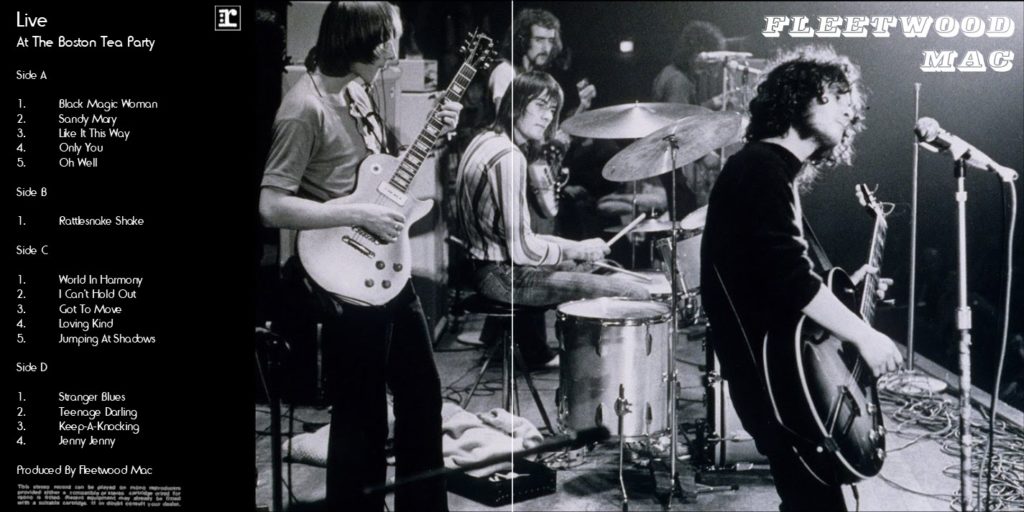
Side A

  1. Black Magic Woman
  2. Sandy Mary
  3. Like It This Way
  4. Only You
  5. Oh Well

Side B

  1. Rattlesnake Shake

Side C

  1. World In Harmony
  2. I Can’t Hold Out
  3. Got To Move
  4. Loving Kind
  5. Jumping At Shadows

Side D

  1. Stranger Blues
  2. Teenage Darling
  3. Keep A-Knocking
  4. Jenny Jenny

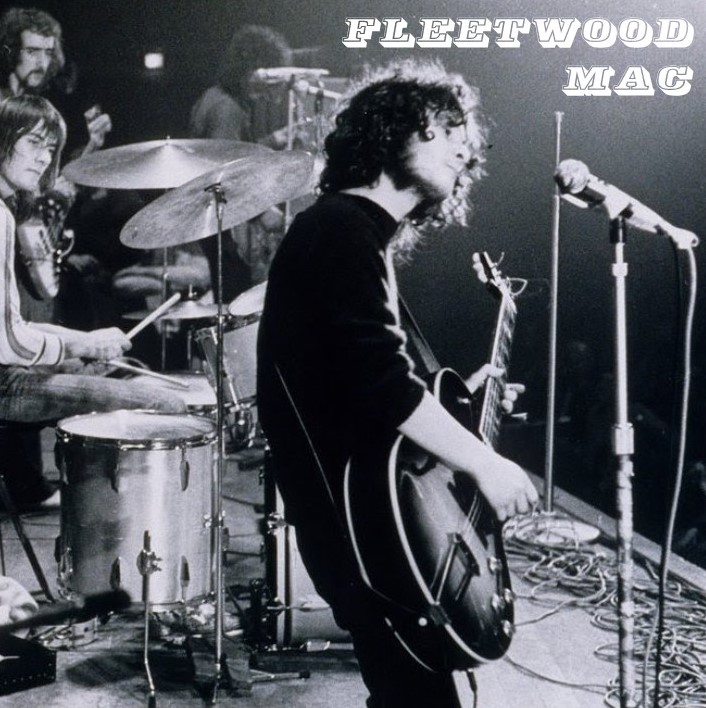
The artwork used a shot of the band live in this period. It may even have been taken at the Boston Tea Party. It was the only picture I could find with all five members of the band playing live and this is also the first time I have completed the back sleeve as well. I took inspiration from the band 1971 ‘Greatest Hits’ album cover and like that, this would have been a gatefold. 

The gatefold sleeve for ‘Live At The Boston Tea Party’.

All of the songs were available on Spotify but has not been edited down in the way it would have been back in the day. Therefore, banter between the songs has been left in so there are occasions is where someone will introduce a song and then the band doesn’t play it. The end of Jenny Jenny also has Peter Green talking about the band ending up having a jam with a guest guitar player and future Eagle, Joe Walsh. If you can get through this, the record stands up as a great document of a band at it peak. Enjoy!

The Beatles – The Long & Winding Road

To finish off the month, I have put together a special Beatles What-If project. Being in lockdown allowed my imagination to wander somewhat, but I do hope that you enjoy this alternative history project of what The Beatles Anthology albums could have been.

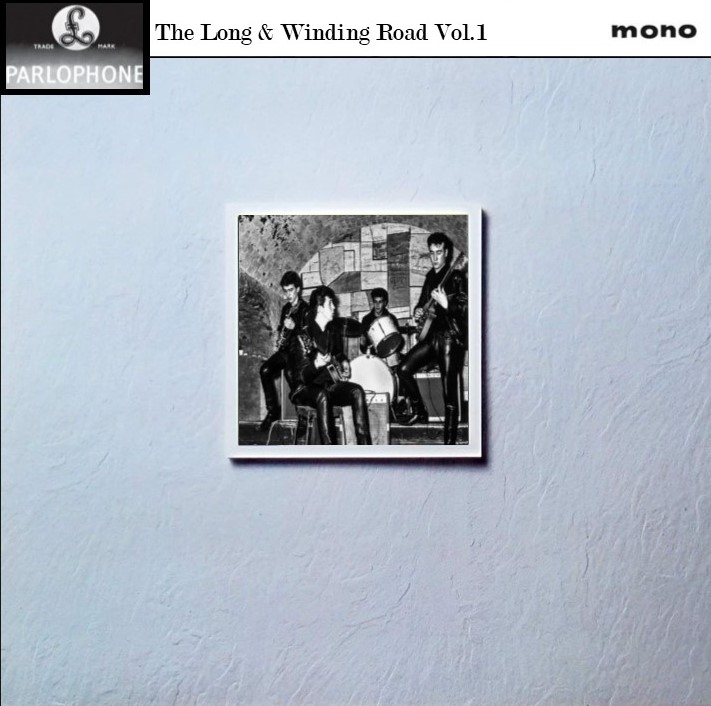
The Long & Winding Road Vol.1

In 1995, The Beatles released their Anthology project that consisted of a TV series, albums, and a coffee table book. They had also thrown open the doors on the archives to allow unreleased studio recordings to be officially heard for the first time. The project had been running from 1970 when Neil Aspinall, future head of the Apple Company, put together a compilation of archival footage that he called The Long & Winding Road. The film was ready by 1971, but as relations between the band members were not as good as they could have been, they were not involved in the project. This film itself became a part of the archive but permission was given to use some of the footage so that Eric Idle could complete his Rutles project. The project was resurrected in 1980 when John Lennon said that he would be getting back together with the other Beatles for a reunion concert and that it would be used as the end of the Long & Winding Road film. Tragically, Lennon was killed before this could happen. 

Up to this point, Beatles fans had been poorly served by archival material being released. Between 1970, when the band split up, and 1995 when the Anthology project saw the light of day, there were a couple of live albums.  The Live at the Hollywood Bowl and Live! at the Star-Club In Hamburg, Germany albums, both from 1977. In 1980, EMI had asked house engineer John Barrett to listen to and catalogue The Beatles session tapes whilst he recovered from cancer treatment. This led to a multi-media event called ‘The Beatles at Abbey Road’, which included some unreleased material being heard for the first time since they had been recorded. All of the surviving Beatles attended the event and Harrison said that he was happy for his solo take of While My Guitar Gently Weeps to be released. EMI prepared an album called Sessions, but The Beatles undertook legal proceedings to prevent it coming out. All of the songs that were put forward for the Sessions album would be released on the Anthology albums. 

These albums contained material that had not been released before and this took the form of some live cuts, TV appearances, demos and alternative mixes of previously released songs. What these albums showed was that there was little in the way of songs that were not used anywhere else. Most of these songs came from the early days of the band and their recordings before signing with EMI in 1962. What was also missing were any curiosities that had come out down the years, and are little known outside of the most dedicated Beatles fans.  

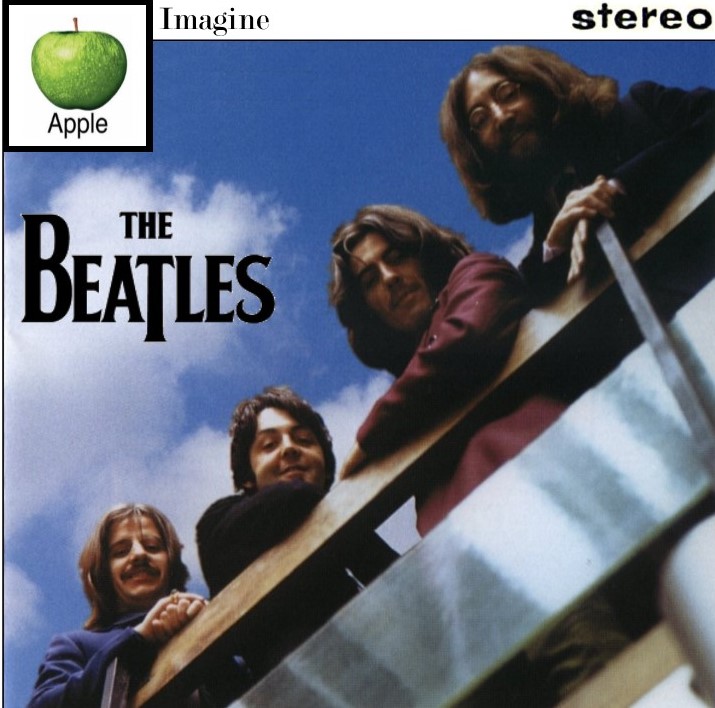
What if the project had been released in 1980 as planned, but instead of what we got in 1995, these records were made up of some of the aforementioned curiosities, some unreleased mixes and demos. I have seen this as a continuation of my Collection of Beatles Oldies LPs, so as these would still be readily available in this alternative timeline, none of the songs included on those collections are included here.  These albums would be released three single LPs and would have a cover photo close to the period when the music was recorded.  That is why Pete Best is included on the sleeve for Vol.1 as Ringo Starr does not play on many of the songs on that record. All of the sleeves are based on the U.S. version of the Rarities album that was released in 1980. 

I have tried to show where these songs can be found as a number of them have been released officially down the years, but some are still in the archive (or on bootlegs, if you know where to look). There is a gap in these collection between 1963 and 1966, mostly down to the fact that the best archival recordings from that period had already been used on the first Collections of Beatles Oldies LP. I would hope that The Beatles in this timeline would see fit not to double up on material to give their fans the best value for money compilations they could. 

Side A

  1. That’ll Be The Day – The Quarrymen – Demo
  2. In Spite Of All Danger – The Quarrymen – Demo
  3. Hallelujah, I Love Her So – Home Demo
  4. You’ll Be Mine Home – Demo
  5. Cayenne – Home Demo
  6. My Bonnie – With Tony Sheridan
  7. Ain’t She Sweet – With Tony Sheridan
  8. Cry For A Shadow – With Tony Sheridan
  9. ‘Till There Was You – Decca Demo
  10. Like Dreamers Do – Decca Demo

Tracks 1, 2, 3, 4 & 5 would be released on the Anthology 1 album (1995).

Track 6 was originally released as a single, but the band was credited as The Beat Brothers (1961)

Track 7 was originally released as a single (1964) 

Track 8 was originally released on the ‘Mister Twist’ EP (1962)

Track 9 is currently unreleased. 

Track 10 would be released on the Anthology 1 album (1995).

Side B

  1. Take Good Care Of My Baby – Decca Demo
  2. The Sheik Of Araby – Decca Demo
  3. Love Of The Love – Decca Demo
  4. Crying, Waiting, Hopping – Decca Demo
  5. Three Cool Cats – Decca Demo
  6. Hello Little Girl – Decca Demo
  7. Besame Mucho – EMI Demo (Pete Best on Drums)
  8. Love Me Do – EMI Demo (Pete Best on Drums)
  9. Please Please Me – Andy White on Drums
  10. Bad To Me – Home Demo
  11. I’m In Love – Home Demo

Tracks 2, 5, 6, 7, 8 & 9 would be released on the Anthology 1 album (1995).

Tracks 1, 3 & 4 are currently unreleased. 

Tracks 10 & 11 would be released on the The Beatles Bootleg Recordings (2013)

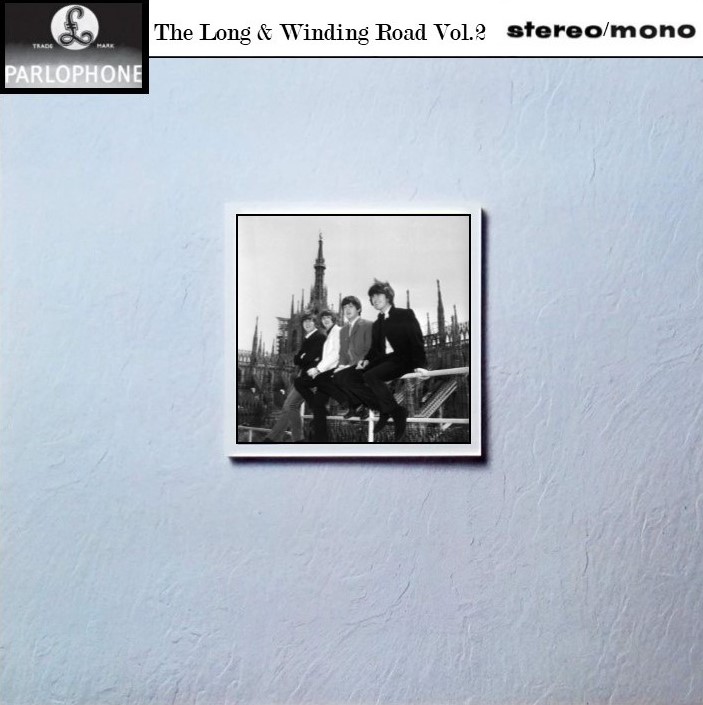
The Long & Winding Road Vol.2

Side A

  1. A Beginning (Take 4)/Don’t Pass me By (Take 7) – Studio Recording
  2. Child Of Nature – Esher Demo
  3. Step Inside Love – Studio Jam
  4. Los Paranoias – Studio Jam
  5. Circles – Esher Demo
  6. Junk – Esher Demo
  7. Can You Take Me Back (Take 1) – Studio Recording

Tracks 1, 2, 3, 4, 5, & 8 would be released on the ‘The Beatles – 50th Anniversary Box Set’.

Track 7 would be released on the Anthology 3 album.

Side B

  1. It’s All Too Much – Full Length Version
  2. What’s The New Mary Jane – Studio Outtake
  3. The Inner Light – Stereo Mix
  4. Tomorrow Never Knows – Matrix XEX 606-1 – Mono
  5. Sgt. Pepper’s Lonely Hearts Club Band (Reprise) – U.S. 8-Track Stereo Mix
  6. Inner Grove Sgt Pepper’s

Track 1 is currently unreleased.

Track 2 would be released on Anthology 3 (1996).

Track 3 would be released on The Beatles EP Collection (1981)

Track 4 was released on the first pressing of the Revolver LP. When ‘Revolver’ was initially mixed, a different master for ‘Tomorrow Never Knows’ was sent off to be pressed. The mix is known as Remix 11. Although subtle, it is different to the standard Remix 8 which was ultimately to replace it. The story goes that each group member was given the first copies from the production line and John Lennon went off to listen to it. But, it turned out that he was unhappy with the mix or that the wrong one had been used and he informed George Martin. Production was then stopped as the new masters were cut and the pressing plates were replaced. First pressings have XEX 606-1 whereas the standard press has XEX 606-2 and beyond (www.thebeatles-collection.com). This version has not been made available since. 

Track 5 was released on the 8-Track version of Sgt. Pepper’s Lonely Heart Club Band (1967) The 8 track edition of Sgt. Pepper’s Lonely Hearts Club Band features a longer edit of Sgt. Pepper’s Lonely Hearts Club Band (Reprise), created to fill more of the tape and “even out” the recording sides. At about 1:15, where Paul’s “Woo!” is heard, the previous 15 seconds are replayed and that “Woo!” is heard again before the song completes (www.aboutthebeatles.com).

Track 6 was released on the initial UK pressing of the Sgt Pepper album (1967). Later pressings, especially in the USA did not include this track. 

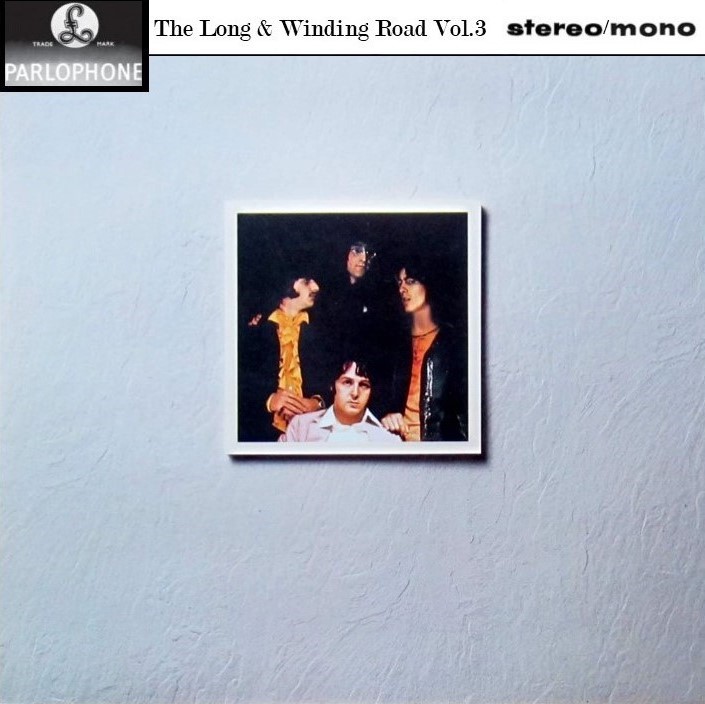
The Long & Winding Road Vol.3

Side A

  1. Come Together – Brazilian Mono Mix
  2. Teddy Boy – Get Back – 1st Version
  3. Dig It – Get Back – 1st Version
  4. Something – Inc. Coda Jam
  5. The Ballad Of John & Yoko – NZ Censored Edition

Track 1 was released in Brazil (1970). Both Abbey Road and Let it Be were released in Mono in Brazil. They were not dedicated Mono mixes though, but a fold down of the Stereo one.

Tracks 2, 3, & 4 are currently unreleased. Tracks 2 & 3 were the original versions of songs that would be released later as the Let It Be album. Track 4 includes an extended piano jam that an was exorcised from the final version. 

Track 5 was made specifically for New Zealand radio with references to Christ edited out. This version has not been made commercially available. 

Side B

  1. Come & Get It – Studio Demo
  2. Old Brown Shoe – Australian Mono Single Mix
  3. Don’t Let Me Down – Get Back – 1st Version
  4. Watching Rainbows (Edit) – Demo
  5. All Things Must Pass – Studio Demo
  6. Goodbye – Home Demo
  7. Get Back (Coda) – Get Back – 1st Version

Tracks 1 & 6 would be released on Abbey Road 50th Anniversary Deluxe Edition (2019)

Track 2 was released in Australia (1969). It is not a dedicated Mono mix, but is a fold down of the Stereo. 

Tracks 3, 4 & 7 are currently unreleased. Tracks 3 & 7 were versions of songs that would be released later as the Let It Be album. Track 4 is a songwriting jam from the Let It Be sessions.

Track 5 would be released on Anthology 3 (1996).

A Spotify playlist could not be created for these collections due to the amount of songs that have still not been officially released. 

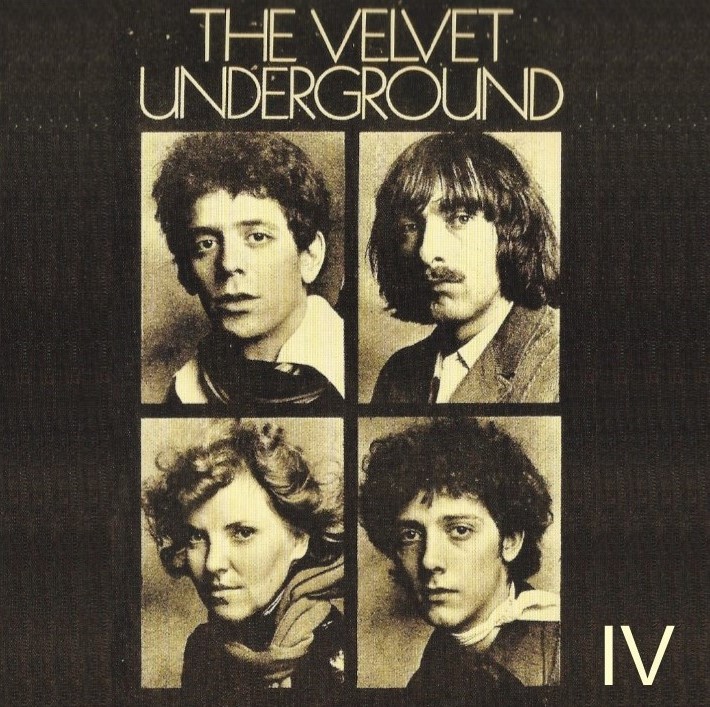
Velvet Underground – IV

As I posted a compilation of The Velvet Underground earlier this month, I thought I would continue by looking at the lost forth album the band had been recording in 1969. This seems to be a staple of many of the what-if album websites but the beauty of these things is just that. It is a what-if album. It was never released and so anyone can take the songs and speculate as much as they like about the running order would be, cover imagery etc. The story of this album has also been told many times but here is a summery. 

By the time the band had come to record their third album founding member John Cale had been fired, they had moved to MGM from Verve (an MGM subsidiary) and the sound had changed. This was down to the removal of Cale, who seemed intent to drive the band towards a more drone, noise infused future. Reed on the other hand, seemed to want to achieve some sort of commercial success with the band and having Cale in the band would have stopped this from happening. The fact that the band did not achieve much success during their life time is neither here nor there. They have definitely sold a lot more units since. Multi-instrumentalist Doug Yule was brought in as Cale’s replacement and he was there in time to record the third album. This album had few of the rough edges that had been present when Cale was in the band, and the subject matter of the songs had become more intimate. With the album recorded by the end of 1968, the band hit the road opening a good deal of 1969 playing live. 

In between live dates, the band was also in the studio laying down fourteen songs that the band members do not seem to have been in agreement as to what the purpose of recording them was. Lou Reed and Maureen Tucker both said that these songs would have been the basis of the next album. Doug Yule says that these songs were professional demos and Sterling Morrison says that this was just a way of looking busy whilst they were looking to get out of their contract. Whatever the reason, these songs have been released numerous times down the years but it is the versions that were included on the 2014 Super Deluxe Edition of the ‘Velvet Underground’ album that will will form the basis of this release. 

Out of the fourteen songs that were released as part of the compilation, two did did not make the cut. That was Rock & Roll as this came out as part of the ‘Loaded’ album and I did not want an overlap of songs. The other is I’m Sticking With You’ which sounds a though it should have been added to an album that was directed towards children or a B-Side. Out of the remaining songs, Andy’s Chest was relegated to a B-Side of whatever song was released from this album as an A-Side. Most probably an edited version of Foggy Notion, even though it no doubt would have been banned due to its lyrical content. That means there is a gap to be filled in with the running time as labels like to release albums with similar playing times on each side. Therefore I had a look at other unreleased material and there was a demo recording of Countess From Hong Kong, Though it was a co-write between Reed and Cale, the demo dates from the second half of 1969 so would fit into the time frame of this record. This takes the album up to about 23 minutes per side, which is long for an album of the time but not unheard of. 

So why didn’t the album come out? If, as Morrison says, the band were just killing time, then there was no intention of releasing it at all. However, if we go with Tucker and Reed’s version of events, then it could have been down to the fact that in 1969, MGM were in financial trouble. One of the ways of reducing this would have been to strip their artists roster of any band that were proving to be unprofitable. The Velvet Underground would have fit this category and so they were out. What MGM did not allow the band to do was to take the master tapes with them. By the time The Velvet Underground had signed with Cotillion Records, they had moved on and only a few of the songs were taken forward to what would be the ‘Loaded’ album. What this ‘lost’ album does is nicely bridge the gap between the recording of the ‘Velvet Underground’ and ‘Loaded’ albums showing the progression the band was making. As it was, these songs lay in the MGM vaults until the mid 80s when they were released along with some other outtakes from the Cale era. 

Would this album have turned The Velvet Underground into a commercial group? Doubtful but Lou Reed did not abandon the songs completely as many of them would appear on his solo records throughout the 1970s’. The front cover of this collection was adapted from a gig poster that band played at the Paramount Theatre in Springfield. Unfortunately, I don’t know the date of the gig as the poster didn’t say.

Side A

  1. Foggy Notion
  2. One Of These Days
  3. Countess Of Hong Kong
  4. Ride Into The Sun
  5. Ocean

Side B

  1. I Can’t Stand it
  2. Coney Island Steeplechase
  3. I’m Gonna Move Right In
  4. Lisa Says
  5. Ferryboat Bill
  6. She’s My Best Friend
  7. We’re Gonna Have A Real Good Time 

Single B-Side

Andy’s Chest

The Squire Presents YouTube Channel

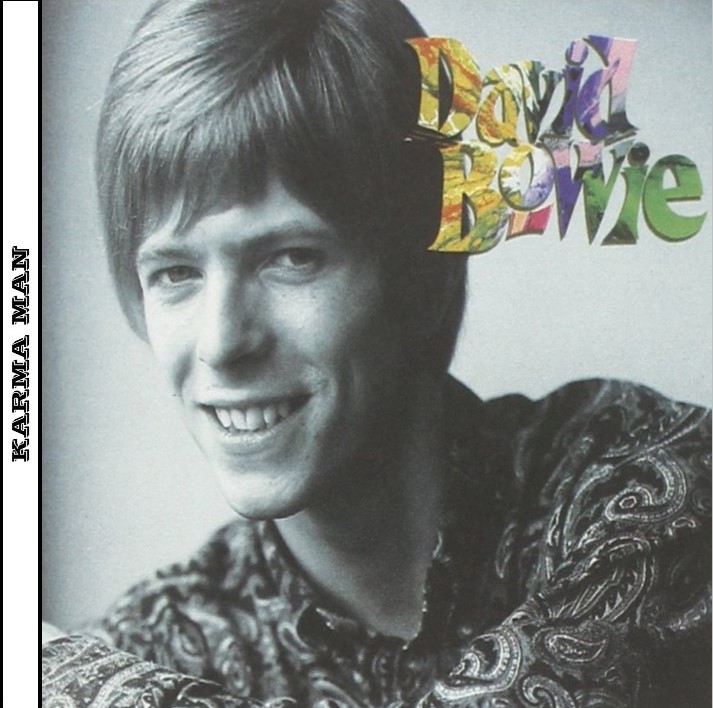
David Bowie – Karma Man (The Second Deram Album)

Normally I would only look to share one what-if album a month because they take a bit longer to put together than the compilations I post. However, the lockdown has given me a little bit more time and this particular piece also fits in nicely with the recent posts about Bowie that went online in February and April. 

Bowie did not see much in the way of success during the 60s, but he was laying down the groundwork for what would come later. He reeled a number of singles on the Vocalion Pop, Parlophone and Pye labels but none of them troubled the charts. Even with these singles behind him, he managed to secure a deal with Deram, a subsidiary of Decca Records. He released three singles and one album whilst on the label but none were chart hits, even though The Laughing Gnome made number 6 in the UK when it was re-released in 1973. The majority of these records were released in 1967, which was one of the most experimental years for music but this curious mix of music hall/ Anthony Newley style numbers fell on deaf ears. Bowie wrote a number of new songs and presented them to the label as potential singles but they were rejected effectively ending his association with Deram & Decca. However, this compilation looks at what might have happened if these songs had not been rejected and Bowie continued to be a Deram recording artist into 1968. 

Even though the recording sessions for the follow-up album were meant to start in the Spring of 1968, I have taken a view that anything that was demoed in that year could be used. I have also discounted any song that was used on the 1969 ‘David Bowie’ album as well, so no Space Oddity I’m afraid. What we have here is a solid, if not spectacular album which is a little rough around the edges, but that was down to the fact that very few of these songs were actually recorded in a studio. Most are simply demos. Would these songs have been changed once Bowie brought them into the studio? Who knows, but what we have here is a rough idea of what a second Bowie on Deram album would have been like, with accompanying singles. 

London, Bye, Ta, Ta – Originally this song was going to be the B-Side of the unreleased ‘In The Heat of the Morning’ single, but it sounded like a great place to start the album off and would have been wasted on the flip of a seven inch. It looks at how London is changing and has become something of a strange young town to the song’s narrator. 

Mother Grey – The influence of Ray Davies on Bowie’s early songwriting was evident on his debut album. With the release of these 1967/8 demos, you can see that Bowie had still not got all of this out of his system with Mother Grey. The song covers the domestic drudgery of Mother Grey as she cleans the house, makes dinner and polishes the picture frame of the son who has moved out of the family home. Similar to Ray Davies’ ‘Two Sisters’ then. 

The Reverend Raymond Brown (Attends The Garden Fete On Thatchwick Green) – This would not have sounded out of place on his debut album, seeing as it follows a cast of characters in an imaginary village. Various characters are mentioned including Rev. Brown who leads the village band during a fete whilst lusting after a local beauty and the local women gossiping about Sally who has got herself pregnant. All a bit Ray Davies. 

Goodbye Threepenny Jones – An observation song from Bowie where he watches a performing  artist performing a show with stories of sadness and despair. Bowie’s companion is heard laughing during these stories and then Joe is thanked for the show and asked not to come again. 

Angel, Angel, Grubby Face – Would this one have made the cut if the second album sessions had gone ahead, seeing as it has a very similar melody line (in places) to London, Bye, Ta, Ta? This song looks at the hustle and bustle of city life with the relatively peacefulness of the countryside. The Village Green Preservation Society before it came out I suppose. 

When I’m Five – Bowie must have thought highly of this song at the time because he not only recorded a studio version, but he also cut a version at the BBC for a radio session. This BBC version would be used as the soundtrack to the short promo film ‘Love You ‘Till Tuesday’. Is it a song for children, or just a child. Bowie sings as though he were a child and would have been this album’s ‘Laughing Gnome’.  

Ching-A-Ling – For a short time in 1968, Bowie was part of a folk trio with Hermione Farthingale (his girlfriend at the time) and initially Tony Hill who was soon replaced by John ‘Hutch’ Hutchinson. The only known studio recording session completed by the band was ‘Ching-A-Ling’ which producer Tony Visconti had booked without the approval of Bowie’s management as a way of getting a record contract. As it was, it didn’t. Bowie would record another demo in 1969 but that would be the last time he revisited the song. 

Love All Around – A lovely Bowie melody that seems to be a love song, but some of the lyrics in the chorus are a bit hard to hear due to his enthusiastic strumming. This causes the recording to become a bit distorted in places.  

The Mirror – Bowie spent time studying mime with Lindsey Kemp and this would be a source of income for him between 1967 and 1969. Kemp asked Bowie to write some songs for a show he was putting on called ‘Pierrot in Turquoise’ and this is one of those songs. The only known recording of these songs date from 1970 when the Pierrot show was broadcast on the BBC under the title of ‘The Looking Glass Murders’. These date from the time period of the second Deram Album and one of the songs, ‘Threepenny Pierrot’ was re-written to be London, Bye, Ta, Ta. 

Karma Man – Bowie had been studying Buddhism since the mid 60s and this song looks at a man who sits crossed legged with all of his world possessions on him. That being his clothes and beads. Could it be Bowie commenting on capitalism or just putting forward what he had seen from his studies of Buddhism? This song looks to have taken inspiration from Syd Barrett without sounding too much like the one time Pink Floyd front man. 

Love Song – When Hermione Farthingale broke up with Bowie and left Feathers, he and ‘Hutch’ Hutchinson continued to record demos and play the odd gig together. When they recorded a demo tape, it included a number of Bowie originals as well as a couple of covers. Bowie would include covers in a number of his early 70’s LPs including this song. Love Song written by Lesley Duncan; who the musicians can be heard talking about at the beginning of the song as she was a back-up singer for Dusty Springfield at that time. 

Life Is A Circus – Another song from the Feathers demo tape. This was originally recorded by an obscure folk group called Djinn. Bowie may well have come across them as Djinn had asked Tony Visconti to be their producer. It would be this demo tape that secured Bowie a contract with Mercury Records. 

Let Me Sleep Beside You – A blatant attempt at a hit single, and would have made a good A-side so it keeps that position here. Artists didn’t always put singles on their albums in the 1960’s. With some suggestive lyrics about a girl now being a woman, this was rejected by his label because of the song’s message. Strange as this was the label that in January 1967, had allowed The Rolling Stones to release “Let’s Spend the Night Together’. I suppose the difference being that the Stones sold a lot of records and Bowie, at this stage, had not. 

Columbine – Another song from the ‘Pierrot in Turquoise’ project. 

In The Heat Of The Morning – One of the songs put forward by Bowie to Dream as a potential single. This was one of the first recordings Bowie made with Tony Visconiti and this, like ‘Let Me Sleep Beside You’, was Bowie looking for a more commercial sound. Deram were not impressed though and the working relationship between the label and Bowie came to an end. 

April’s Tooth Of Gold – A song detailing young people and their interesting fashion sense and the older generation not having a clue as to what is going on. The characters and language used may well have been out of date by the time of the second album sessions, so relegation to a B-Side would have been a fitting home for it. The strumming is a bit reminiscent of Autumn Almanac by The Kinks.  

The release of ‘Conversation Piece’ in 2019 shows the leap that Bowie made between his two self titled albums was not as great as would first appear. With the demos opening a door on a songwriter honing his craft, would a second Dream album have allowed Bowie the development time to make that leap? Maybe, maybe not. 

Some of Bowie’s earlier material can be heard on the Songs of David Bowie podcast. http://www.thesquirepresents.co.uk/episode-87-the-songs-of-david-bowie/

Side 1

  1. London, Bye, Ta Ta – 1
  2. Mother Grey – 2
  3. The Reverend Raymond Brown (Attends The Garden Fete On Thatchwick Green) – 2
  4. Goodbye Threepenny Joe – 2
  5. Angel, Angel, Grubby Face – 2
  6. When I’m Five – 1

Side B

  1. Ching-A-Ling – 2
  2. Love All Around – 2
  3. The Mirror – 3
  4. Karma Man – 1
  5. Love Song – 2
  6. Life Is A Circus – 2

Singles

  1. Let Me Sleep Beside You – 1
  2. Columbine – 3
  3. In The Heat Of The Morning – 1
  4. April’s Tooth Of Gold – 3         

Key

1 – Taken from David Bowie (1967) Deluxe Edition

2 – Taken from Conversation Piece

3 – Demo from Looking Glass Murders (Currently Unreleased)

The cover of this compilation is adapted from The Dream Anthology release from 1997. 

Due to the still unreleased nature of some of these songs, it has not been possible to produce a Spotify playlist

The Squire Presents YouTube Channel

The Beatles – Another Collection of Beatles Oldies

In this post, I will continue with my alternative history of The Beatles with a follow up to the 1966 collection, A Collection of Beatles Oldies. 

With The Beatles officially no more by the end of 1970, EMI had potentially lost a very lucrative cash cow. The individual members releasing a number of solo albums and singles throughout the early years of the 1970s, which did sell a significant amount of units, offset this somewhat. However what-if EMI had decided in its infinite wisdom to produce an LP for Christmas 1970 which followed on from their previous compilation, A Collection of Beatles Oldies. It would use the same format as the previous volume so it would include B-Sides, a few unreleased songs from the archive with a couple of rarities thrown in for good measure.

Rain (Mono) – Left off of the previous volume for being released the same year as the A Collection of Beatles Oldies compilation. Originally released as the B-Side to the Paperback Writer single.

Baby You’re A Rich Man (Mono) – Originally released as the B-Side to the All You Need Is Love single.

You Know My Name (Look Up The Number) (Mono) – Originally released as the B-Side to the Let It Be single. Even though the single came out in 1970, the initial recording sessions for this song were started in 1967 and sounds more in tune with the psychedelic songs of that year than the more straightforward music the band were producing when it eventually saw the light of day. 

The Inner Light (Mono) – Originally released as the B-Side to the Lady Madonna single.  

I Am The Walrus (US Mono single mix) – This version of the song includes an extra bar of music before the words ‘yellow matter custard’. The UK version was an edit of the first half of Take 10 with Take 22. This was the version released on the B-Side of the Hello, Goodbye single and the Magical Mystery Tour EP. It would seem that Capitol Records in the US were sent an unedited tape of Take 22. 

Penny Lane (Stereo) – This dates from the 1980 US Rarities, so it could be said to be a little out of the time frame of this record, but this is a unique version worthy of inclusion here (and who’s to say that someone might have done the same thing in 1970 anyway). This was a combination of the stereo version of the song, which American audiences had not heard up to that time with some additional piccolo trumpet at the songs conclusion which had been heard on US promotional copies of the single.

Revolution (Mono) – Originally released as the B-Side of the Hey Jude single. 

Across The Universe (Mono) – This version was released on the charity album, ‘No One Gonna Change My World’. This version had some added sound effects added to make it fit into theme of the record, which was released to raise money for the World Wildlife Fund. 

Don’t Let Me Down (Mono) – Originally released as the B-Side to the Get Back single. 

Old Brown Shoe (Stereo) – Originally released as the B-Side to the Ballad of John & Yoko single. 

Not Guilty (Full Length Version – Stereo) – Recorded during the sessions for The Beatles ‘White Album’. One of the last songs to be left off of the album, it was felt by Lennon especially, that airing the bands dirty laundry in public would not be beneficial to their public image. Listen to the song’s lyrics and you will see what he means. Harrison said that the song was a reference to the band’s trip to India, the Maharishi Mahesh Yogi and the lavish launch of Apple Corps, which he had missed due to spending time with Ravi Shankar instead of returning more quickly from a trip to Asia. The song was legendary with Beatles fans during the 70s due to it being a known, but not heard outtake. Harrison did record a solo version for inclusion on his 1979 George Harrison album, but the original Beatles version did not see the light of day until 1996, and even then, it was in edited format. The full-length version would not be officially released until 2018. 

Christmas Time Is Here Again (Mono) – Between 1962 and 1969, The Beatles would release a fan club exclusive single with songs and sketches. One of those was Christmas Time (Is Here Again), which was included on the 1967 release. This is the edited version that would eventually be released to the general public as a B-Side on the 1995 Free As A Bird single. 

Side A

  1. Rain (Mono)
  2. Baby You’re A Rich Man (Mono)
  3. You Know my Name (Look Up the Number) (Mono)
  4. The Inner Light (Mono)
  5. I Am The Walrus (US Mono Single Mix)
  6. Penny Lane (US Rarities Remix Trumpet Ending Edited onto Regular Stereo Version)

Side 2

  1. Revolution (Mono)
  2. Across the Universe (Mono – No One Gonna change My World Version)
  3. Don’t Let Me Down (Mono)
  4. Old Brown Shoe (Stereo)
  5. Not Guilty (Stereo – Full Length Version)
  6. Christmas Time Is Here Again (Mono)

This playlist could not be reproduced on Spotify, as they contain songs not available on the platform at this time. The front cover is adapted from one of the rejected ideas that had been put forward for the ‘White Album’. 

The Squire Presents YouTube Channel

Hunters – Original Soundtrack

The first playlist of the month is something I have never done before and that is completing an Original Soundtrack album. Now, this isn’t for a film (which you might expect), but a TV show. The show in question is Hunters which looks at a group of Nazi Hunters working in the USA in 1977. The show is a curious mix of of a serious story mixed in with some lighthearted moments and you will really need to watch the programme to see what I am talking about. I really loved the music that they used and looked around to see if it had been released anywhere.  Now, TV shows don’t have the same track record of producing soundtracks in comparison to films and it would seem that this is no exception. Luckily in this day and age, there are websites that list the music from programmes such as this and I used these to help me compile this mix. I do hope that those websites are accurate and it’s too late if it isn’t. 

Before putting this together, I was inspired by the soundtracks Quentin Tarantino films have. The only thing missing would be dialogue from the films but as it turns out, that would have made the rustling album too long. I also thought that as the show is set in 1977, all of the music should have been produced on or before that year. That meant there was no place for the lovely Verse by Olfur Arnalds & Alice Sara Ott which was used quite extensively and in multiple episodes. To accommodate the amount of awesome music, I felt that the album should be a double. Due to the limitations fo the vinyl format, it did mean that not every song from the show could be used. 

Being based upon the length a vinyl record did mean that the sides needed to match up in terms of play time. There was no point in having a side that lasts for 15 minutes and the other 20. This did prove a bit of a challenge as I also like the music to flow sonically as well. Even though this is not perfect in that regard, I am still happy with the end result. I wanted all of the songs to be available on Spotify so I could share this collection with you. To my surprise, Spotify had all of the songs I picked, some of which are quite obscure. It just goes to show that when it comes to Spotify, artists such as David Bowie have gaps in their collections but obscure groups such as Crowmell and 5 Spiritual Tones are represented. 

Lastly, I needed a front cover. Most of the images on line were in the same format as a movie post and do not fit in to the square associated with a record sleeve. Luckily, an image came up on the Glamsham website that was perfect. After a bit of careful editing, the cover was done. Enjoy.

Side 1

  1. Get In A Hurry – Eugene Blacknell & New Breed
  2. Put Your Head On My Shoulder – Paul Anka
  3. Baby, Do That Thing – Honey & The Bees
  4. All Along I’ve Loved You – Tony Ashley & The Delicates
  5. Evil Woman – Lou Rawls
  6. The Impossible Dream – Robert Goulet

Side 2

  1. O Caminho Do Bem – Tim Maia
  2. Lovin’ Is A Full Time Job – Jay Ramswey
  3. Show Me What You Got – Frank William’s Rocketeers
  4. Song Of A Sinner – Top Drawer

Side 3

  1. You Make Me Feel Brand New – The Stylistics
  2. Bad Situation – 5 Spiritual Tones
  3. Lonesome City – The Black Canyon Gang
  4. Oh I Wept – Free
  5. Night Moves – Bob Segar & The Silver Bullet Band

Side 4

  1. Let’s Go Fishing – Turner Brothers
  2. Down On The Town – Cromwell
  3. Nobody Knows – Pastor T. L. Barrett
  4. Oh! Sweet Nothing – Velvet Underground

The Squire Presents YouTube Channel

The Beatles  – A Collection Of Beatles Oldies

Upon completing The Doll’s House fantasy LP, I began to think about what other fantasy album projects could I look at? Having a look through The Beatles records in Squire Towers, I came across a now deleted compilation called ‘A Collection of Beatles Oldies’. Looking at the track listing, I wondered if this could be improved upon? So with Ian McDonald’s classic book ‘A Revolution in the Head’ in hand, I thought I would have a go.

In late 1966, EMI were worried. The Beatles did not have any new product for them to sell during the Christmas period and the only new piece of merchandise anyone was set to hear was the annual fan club flexidisc. By this time the band had decided to retire from touring, so their fans in the UK also wouldn’t have any concerts from them to look forward to. Fans even protested outside the house of manager Brian Epstein when that news was released. There were rumours in the press that the band was on the verge of splitting up because the individual members had been working on a lot of projects without the involvement of the other three. This led EMI to decide to put together a compilation LP of old songs as a means of keeping the Beatles brand going.

The album EMI came up can be considered the first Beatles compilation LP. Out of the 16 songs on the album, 13 had been released as singles in the UK. Of the other three, Michelle and Yesterday had been released as singles in other territories and the final song, Bad Boy, had initially only been released before in the US market. EMI saw this as a way of appealing to UK record buyers as they would be getting a song they probably otherwise didn’t have. In another effort to tempt the record buying public, some of the songs were remixed in stereo. Up until the late 60 The Beatles singles released in the UK were available only in mono. The compilation did receive some good reviews, in part because it contained 16 songs instead of UK industry standard of the time of 14. It was also well received as an import in the US. It was not without its critics, as some of the songs had already been used on compilation EPs released in the preceding years, and there was a shortage of hard to find or unreleased songs. It was clear to everyone what this record was; a quick cash in.

However, what-if EMI had taken some time and released a compilation that was full of harder to find songs and more archive material? What could have been used? Well, all of the songs must have been recorded before December 1966, when the LP was released. The Beatles may not have been in favour of allowing unreleased songs out until the Anthology series of the 1990s, but this is a what-if scenario record so everything is fair game.

Love Me Do (Original Single Release – Mono) – The second out of three versions The Beatles recorded for EMI. This version has Ringo Starr on drums and it was this one that was released as the Beatles first single. The version found on the Please Please Me album was the third version recorded with session drummer Andy White playing drums. The difference between these two versions was that on the third version, Ringo can be heard playing the tambourine. There is no tambourine on the second version.

How Do You Do It? (Mono) – This was almost the band’s first A-Side. Producer George Martin felt it would be a hit single, but The Beatles were not keen on releasing it as they felt the song didn’t fit their sound. Later it was a number one hit single for Gerry & The Pacemakers (who were also produced by George Martin). The Beatles version would not see the light of day until the Anthology 1 album in 1995.

Thank You Girl (Mono) – Originally released as the B-Side to From Me To You.

One After 909 (Mono) – Recorded in early 1963 this is one of the earlier writing efforts of the Lennon and McCartney partnership. The song would not be released at the time but would be re-recorded six years later and included on the Let It Be album. The original version would later be released on the Anthology 1 album.

I’ll Get You (Mono) – Originally released as the B-Side to She Loves You.

This Boy (Mono) – Originally released as the B-Side to All My Loving.

And I Love Her (Stereo) – Originally released on the German version of the Something New album, this includes a few more bars of guitar playing in the closing riff. It is unknown why this version was created but the Beatles did not play this extended passage when recording the song, so whoever created this created a rarity. This was later re-released on the US version of the Rarities album in 1980.

Komm, Gib Mir Deine Hand (Mono) – A German language version of I Want to Hold Your Hand. It was not unusual for bands to record songs in languages other than English to appeal to foreign markets. This was The Beatles only attempt at doing this, but was not only released in Germany. The single was given a release in Australia when the band toured there in 1964, and appeared on the US version of the Something New album. The title is not an exact translation as in English it is ‘Come, Give me Your Hand’.

Sie Liebt Dich (Mono) – Originally released as the B-side of the Komm, Gib Mir Deine Hand single

Leave My Kitten Alone (Mono) – Recorded during the sessions for the Beatles for Sale album. Why this was not put on the record instead of Mr Moonlight is one of those questions we will no doubt never know the answer to. It is a considerably better recording. It was considered for a single release in the mid 80s when the Sessions album was being put together. The Sessions project was an attempt to release some previously unreleased Beatles material but was blocked by the band at the time. It was eventually released on the Anthology 1 album.

She’s A Woman (Mono) – Originally released as the B-Side to I Feel Fine.

Yes It Is (Mono) – Originally released as the B-Side to Ticket To Ride

That Means A Lot (Mono) – Recorded for possible inclusion on the Help album. The Beatles were not satisfied with their version so the song was given to P.J. Proby to record, for whom it would reach the top 30 in the UK singles chart. The Beatles version would later be released on the Anthology 2 album.

Bad Boy (Mono) – Written by Larry Williams, this was one of a number of his songs that the band recorded. It was only intended for the US market and was released on the Beatles VI album. As noted above, this was included on the official version of A Collection of Beatles Oldies as a way of appealing to Beatles completist.

I’m Down (Mono) – Originally released as the B-Side to the Help single.

Side A 

  1. Love Me Do (Single Version)
  2. How Do You Do It?
  3. Thank You Girl
  4. One After 909
  5. I’ll Get You
  6. This Boy
  7. And I Love Her (German Stereo Mix US Rarities LP)
  8. Komm, Gib Mir Deine Hand

Side B

  1. Sie Liebt Dich
  2. Leave My Kitten Alone
  3. She’s A Woman
  4. Yes It Is
  5. That Means A Lot
  6. Bad Boy
  7. I’m Down

Amongst the songs that were up for the selection on the compilation was If You’ve Got Trouble, which was up for consideration as Ringo’s song on the Help album. However, the band were not happy with it and it is easy to see why. It is not a very good song and the band seemed to know it. In time it was included on Anthology 2. Also missing is Rain, which was the B-Side of Paperback Writer. Released in May of 1966, this omitted as it would have made the album sides a bit lopsided. As it is, both sides clock in just over 18 minutes. I would have also though that this would have been considered too new to be on a collection of oldies. However, Paperback Writer was included on the released version of this album. The LP uses the cover from the original release in 1966.

Spotify did not have the German Stereo single version so to make up the numbers, the stereo mix from A Hard Days Night was used in its place.

The Squire Presents YouTube Channel

The Beatles – A Doll’s House

I did say last month that I would be producing playlists of CD length, but I have also been compiling a number of what could be considered ‘lost albums’, or LPs that I would like to hear. Here is the first.

It is also the first of a number of Beatles related posts I’ve prepared, and this is a concept that is neither new, nor original, but it is one I had never thought about until a friend asked me what would be my track listing for a one disc ‘White Album’. The band’s producer was in favour of a single album at the time but was over ruled by the band. Maybe he was right, maybe he wasn’t but what we are left with is an album that was the first to highlight that The Beatles were going in their own separate ways. It just took them another year and a bit to realise it. If the single album is to follow the rough template of the bands albums from Help onwards, that would mean one song sung by Ringo Starr, two by George Harrison and the rest would be Lennon and McCartney. Okay, Revolver had three vocal performances by Harrison, but Sgt Pepper only had one so it evens itself out there. So, what would make the cut on this new slimmed down version of the album?

Side 1

  1. Back In The U.S.S.R.
  2. Dear Prudence
  3. Glass Onion
  4. I’m So Tired
  5. Blackbird
  6. Savoy Truffle
  7. Sexy Sadie
  8. Happiness Is A Warm Gun

Side 2

  1. Martha My Dear
  2. Mother Nature’s Son
  3. Yer Blues
  4. While My Guitar Gently Weeps
  5. Julia
  6. Long, Long, Long
  7. Good Night

The record has to fit within the recording limitations of a single LP, so we are looking at about 23 minutes for each side. Even with those limitations, you certainly get your monies worth with this album as there is a total of fifteen songs. The first song could not be anything other than Back In The U.S.S.R. as it is the best side starting song on the original double. The segue into Dear Prudence works brilliantly as well. A more mellow effort after the upbeat first track. Glass Onion just sounds right as track three and is in the same place it was on the original album. The tempo slows down again with I’m So Tired before the folky Blackbird continues the mellow mood. We are brought out of this by the first Harrison song on the album; the upbeat soul inspired Savoy Truffle. It also includes a nice horn track that would become a feature of Harrison’s solo work. We finish off the side with another two Lennon songs in Sexy Sadie and Happiness Is A Warm Gun

Side two kicks off with two McCartney songs in Martha My Dear and Mother Nature’s Son, which wouldn’t be the only songs to feature a sole member of the band. The guitars are turned up for the next two tracks with the bluesy Yer Blues and possibly George Harrison’s greatest song whilst in The Beatles, While My Guitar Gently Weeps. We then have a bit of whimsy from John Lennon with Cry Baby Cry with the hidden track Can You Take Me Back still there leading nicely into Long Long Long. We end with the Starr sung, but Lennon written Good Night. Not the best song on the White Album, definitely not the worst but better than the Starr original Don’t Pass Me By.

The tracks that didn’t make the cut were cut in my opinion, for good reasons. Either I didn’t like them or they were not as good as the ones I kept. The break down is seven sung by Lennon, four by McCartney, three by Harrison and one by Starr. I suspect there will be those who will say that their version would look nothing like this, but as this is another of those What-If’s. Someone else will no doubt come up with a different track listing that for him or her, is better. For my money though, this is a pretty good album.

The artwork is taken from one of those in consideration when the album was going to be called A Doll’s House, but was eventually used on the compilation Beatles Ballads. I also used the mono mix of the album, as this was the last Beatles album to have a dedicated mono mix, but it is possibly the least known version of any Beatle album.

You can hear the playlist below, but not in mono I’m afraid. Annoyingly, Spotify only has the Stereo mix of the album available at this stage.